When I was a Sophomore in College, I changed my major from Music to Religion. The year prior, I had stumbled into an Academic Study of Religion course, Intro to the Hebrew Bible, and it completely captured me. I was raised in a Missouri Synod Lutheran Church and attended the school at the church until I was in 5th grade. My experience of Religion during my childhood was pretty rigid – we were taught that “the Devil roamed the halls of public school,” that women were not to be leaders in the church, that queer people were to be feared, and that everyone that did not believe what we did was going to burn in hell. It was intense, and while I tried my damnedest to take on these ideas, my heart was always curious for more – more love, more compassion, more acceptance, more hope and less fear, more curiosity and less certainty.
I left that Missouri Synod school after 5th grade and attended a public middle school from 6th grade onward. I quickly abandoned regular church visits, youth group, and those old “beliefs” and Religion faded into the background of my identity. I delved deeper into theatre and music, finding more appreciation for this earth, its beauty, and love of the human body than I ever found in Religion. I remember consciously shifting from understanding the world as the church told me it was and establishing beliefs of my own.
In High School, things just got hard. There was chaos at home, I was navigating depression, and I was feeling alone and isolated. In short, I was looking for something. We’ve all been there in some capacity, right? I didn’t have any tools or language for what to do with these feelings, except for turning to the church. I found a megachurch in the Chicagoland area that a friend had taken me to as a kid, and I quickly fell into a cult-like group. The church was a conservative, manipulative, and hypocritical body that hid under the guise of “progressive” since it was in a warehouse and boasted a large “praise band.” They marketed themselves as a place where you can “encounter God” rather than just sitting in a pew and singing hymns meaninglessly. I became deeply involved – deeply evangelical, deeply critical of myself and others, and deeply self-righteous. I was sucked right in and it took me years to get out.
Enter my college experience – I was on the mend from the megachurch but certainly still identified as a Christian. As you can see, my entire life had been steeped in Religion, and it wasn’t until I took this mandatory class that I discovered Religion was something that could be studied academically. I loved the academic study of Religion – I loved putting stories from both the Hebrew Bible and the New Testament into historical context, looking at the ancient languages the stories were written in, translating them for myself. I loved asking hard questions about World Religions and their evolution, studying how Religion has the unique ability to both inspire both radical hope and radical violence. I changed my major and never looked back – abandoning my Christian identity, and taking on some form of agnostic or “Spiritual but not Religious” identity.
Sophomore Year I took my first Southeast Asian Religion course. I was introduced to Buddhism, Hinduism, and Jainism. I was obsessed. My professor was a Buddhist, and started each and every class with a different Buddhist meditation. I was introduced to the Vedas, the Bhagavad Gita, and multiple Buddhist Sutras. I felt a gravity towards Buddhist philosophy – that all life is suffering and attachment to it will cause us harm, that we must sit with ourselves and tame our minds so that we may have compassion for others, that we are all connected. I loved the focus on nonviolence – whether that meant toward the earth, the earth’s creatures, other humans, and ourselves…I could go on and on. I read books by Thich Nhat Hanh and the Dalai Lama, translated Buddhist Sutras, and modern meditation works by Jack Kornfield and Jon Kabat-Zinn. I didn’t adopt the identity as Buddhist immediately, but it was something that was on my heart for quite some time.
The following year, I gave up eating meat as a nonviolence practice. This was the first time I took an actionable step, in my mind, towards a more nonviolent lifestyle. It was difficult at first, but I loved that every time I sat down to eat, I could practice this meditation in compassion. I started to take this practice more seriously and cultivate a nonviolent practice that extended to myself and others. This same year, my Interfaith Seminar went to a Zen Buddhist monastery near my University. Oh, my heart was on fire. We sat in meditation with the monks and then drank tea afterwards and asked the head monk questions. I decided that I had to align myself with this Religion – I started identifying as Buddhist after that visit and committed to attending regular Wednesday night meditations there.
It was pretty quickly after I started identifying as Buddhist that a couple of Christian girls in my program began talking about me behind my back. “How can you just wake up one morning and BE BUDDHIST?! Who does she think she is…does she even know anything about Buddhism? This is so offensive…” etc. This came back to me from multiple friends in the Religion Department, and I was deeply hurt. On the one hand, they were right. Cultural appropriation of Eastern philosophy and Religion is a major problem in the West, and it’s not lost on me that White Women are the worst culprits. On the other hand, this Philosophy was changing my life and speaking truth to me. I was committed to this study because I wanted to lean into the questions of the universe and pursue what “Truth” meant around the world. I decided to lean in and worry about myself – my Buddhism could mean to me what it needed to.
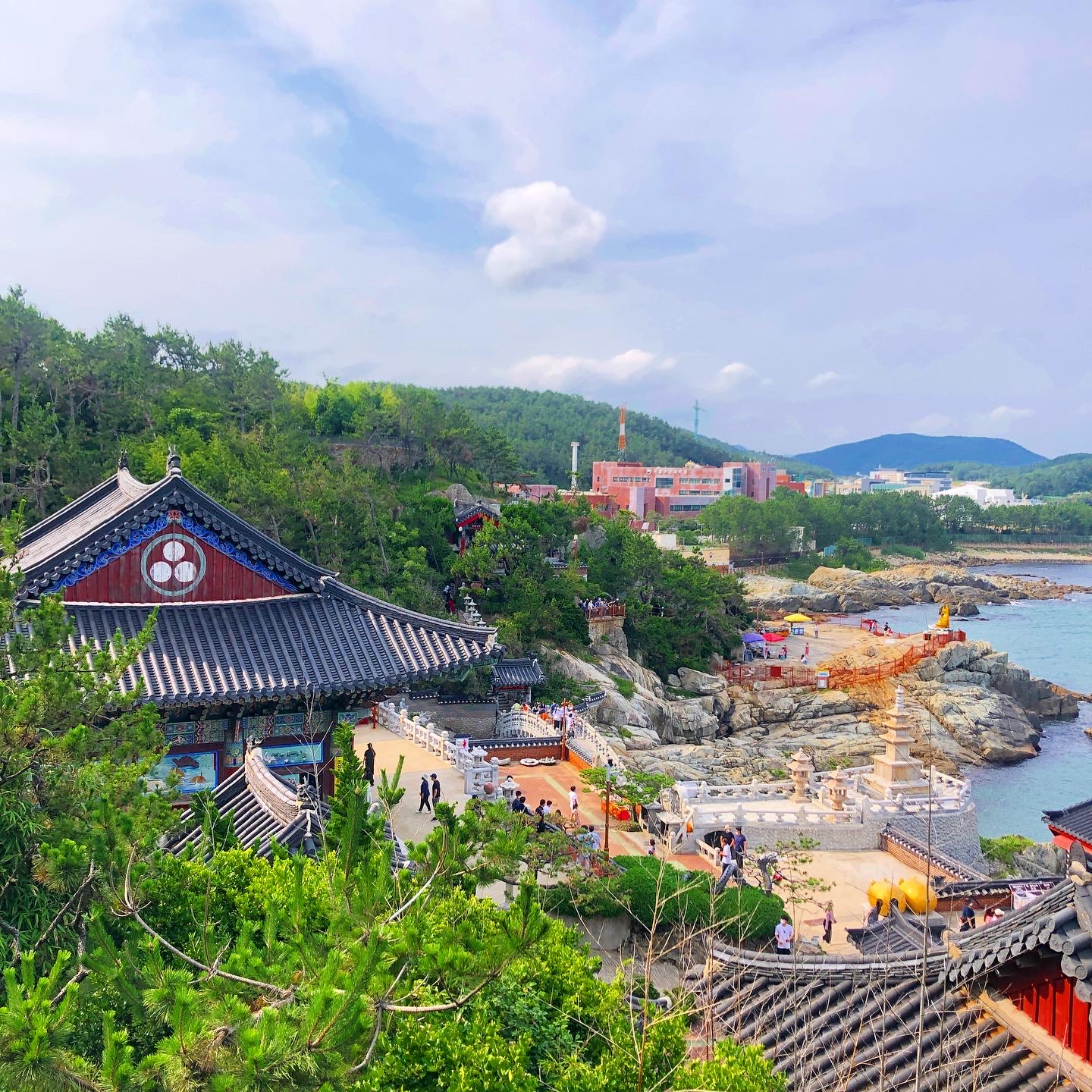
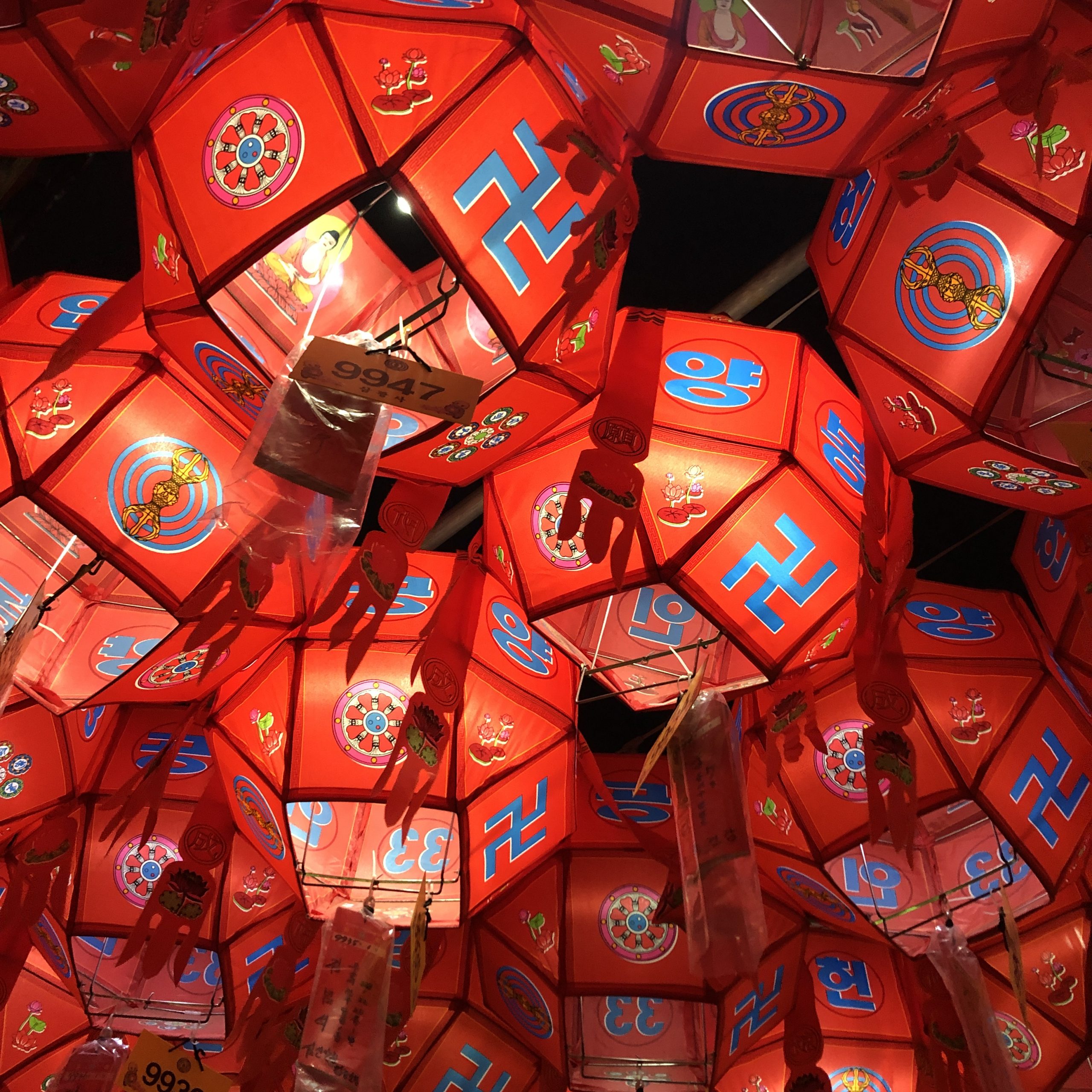
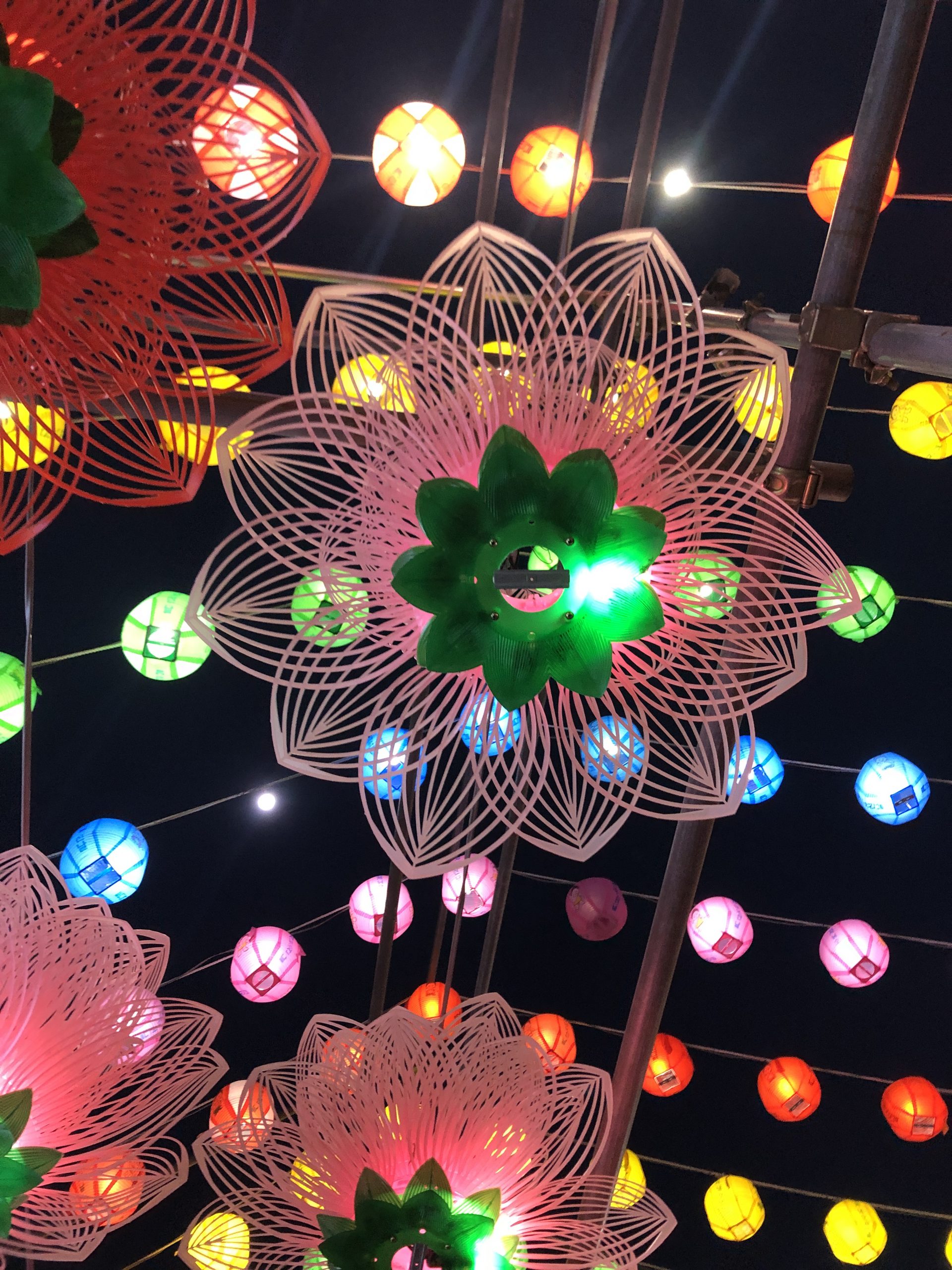
And here we are in the present moment, I’ve moved to Asia and intentionally picked a country to teach in that is steeped in Buddhist history and filled with modern Buddhists. It was an absolute honor to attend Buddha’s Birthday celebration at Samgwangsa Temple in Busan. The festival is world-renowned for it’s fantastic lantern festival, that features thousands of lanterns decorating the temple and its massive grounds. While visually stunning, it was also a reverent celebration filled with meditation, devotion, and prayer by practicing Buddhists. There were some traditions I understood, but the vast majority of practices were completely foreign to me. Instantly, the college critique of those women weighed on me. “How could I have this identity, and have no knowledge of these traditions?”
This is where I am today. Today, I have mostly stopped using the term “Buddhist” to describe myself. Rather, I use language that I’ve been deeply inspired and shaped by Buddhist thought and practice. Whenever I’m asked why I don’t eat meat and follow a mostly vegan diet, I respond saying that it is a practice in non-violence that was inspired by a Buddhist practice. I still sit in meditation and utilize Buddhist meditation tools and practices, and I am most certainly in South Korea to learn more about Buddhism. My therapy has been informed by Buddhist philosophy and Buddhist thought is certainly the way I frame my understanding of the world. I am taking my whiteness and all of it’s horror and baggage seriously, and for this reason I’m not using the title “Buddhist” until I feel like I am better educated on Buddhism globally. And yet, I also will not shy away from a practice that is so sacred and transformative. I’m here to learn and I’m here to be a student. I hope to continue learning from people of color and learning practices that are honoring of this tradition, rather than appropriating it. I understand that this will be a lifetime of work. But I’m here, and I’m ready to learn.
All my Love,
Lex